
We are excited you are looking into solar for your home!
Today, solar electric systems are more affordable than ever, thanks to state rebates and federal tax credits, utility rebates, and net metering laws that allow consumers to sell excess power back to the grid. Your solar electric system will provide a clean and stable, low maintenance source of energy for many years into the future, while offsetting your use of traditional greenhouse gas-emitting energy sources, such as coal and natural gas.
In fact, with a properly sized solar electric system, your home can be a net zero power plant, producing enough clean energy on a yearly basis to meet all your electricity needs.
On average, Western Oregon receives more sunlight per year than Germany, one of the world’s leading solar markets.
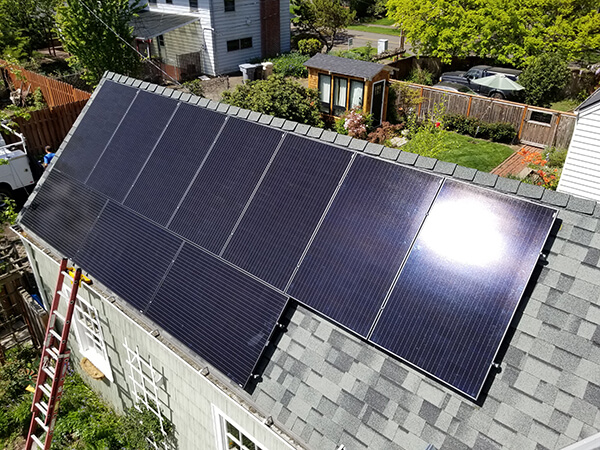
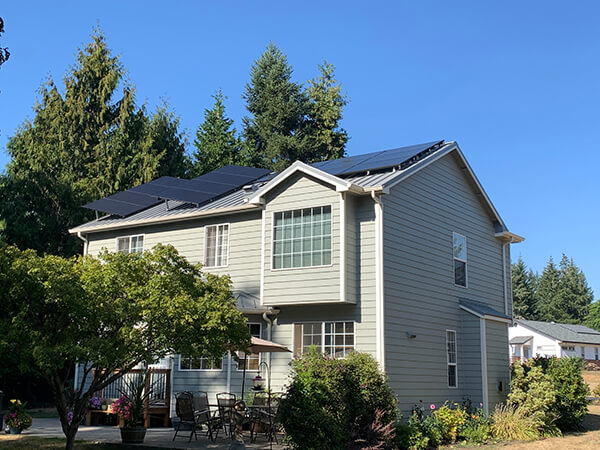
Why Go Solar
The cost of solar is better than ever.
PV module prices have seen a 51% drop over the last decade. Currently the $/watt of solar panels is the lowest we have ever seen, and while the prices have gone down the efficiency has gone up allowing more power per square foot and a faster return on investment. Our company prides itself on installing USA made Teir 1 solar panels from local distributors.
Solar panels last
Solar panels carry a power output warranty of 25 years. In fact, one can expect up to 40 years without significant loss of power. Most grid-tie solar panel systems require very little maintenance, if any.
Solar increases the value of your property
There have been numerous studies that show houses with solar installations sell for more. In other words, installing solar panels is a home improvement that increases your property value, similar to adding a deck or remodeling the kitchen and solar will pay for itself over time.
What to Consider Before Going Solar
Reduce Your Current Energy Consumption
Solar electricity is a wonderful way to meet your energy needs, however, it is expensive. Changing some of the ways you use your electricity and being more conservative could reduce the overall size and cost of your solar electricity system significantly.
Make Your House More Energy Efficient
Consider how to make some energy efficiency improvements such as insulation, windows, fluorescent lights, or replacing old appliances that could reduce your energy consumption. There are great incentive programs in Oregon for heat pumps too!
Make Sure Your Property Is Suited For Solar
It is best to consult a professional to design your solar system, but there are some basic things to consider. Do you have available roof space that faces south, west or east? Do those roof areas get significant sun or is your home shaded by trees most of the day? Is there a sunny area of the property that is large enough to mount solar panels on the ground? Energy Trust of Oregon and Oregon Department of Energy require a minimum “solar resource factor” to qualify for rebates. Typically, we can get a good idea of this with modern satellite imagery and software We verify your site in person before the start of every project.
Building a new home?
Please check out this how-to guide when building a new home. You only get one chance to design and build each house and making it more efficient and ready for solar is a great way to set yourself up for the future.
Incentives
Energy Trust of Oregon
Are you a Pacific Power Customer? Energy Trust of Oregon has incentives for your solar project. Energy Trust’s Solar Within Reach program offers increased incentives for qualifying incomes.
Oregon Solar and Storage Rebate
Oregon homeowners can receive a rebate of up to $5,000 for a solar electric system and up to $2,500 for an energy storage system. The amount of funds for this program is limited and subject to a first come first serve basis. Once we create a contract with a customer, we reserve these funds for your project. Currently this program is still funded as of March 2023!
Federal Tax Credit
If you install solar energy equipment on your residence (or rental) any time this year through the end of 2032, you are entitled to a nonrefundable credit off your federal income taxes equal to 30 percent of eligible expenses. There’s no dollar limit on those expenses; you’re entitled to that 30 percent tax break whether you spend $20,000 or more than $100,000 on costs associated with a residential solar system.
Net Metering
Net metering simply means that the utility pays the customer the same rate as the customer pays the utility for exported solar generation on either a monthly or annual basis. For Pacific Power and Consumers Power customers, the utilities will allow customers to bank excess energy until the March billing cycle of the following year. As long as you size the system to your annual needs or a little bit smaller, you will receive full retail value for all of the power you produce until the utility year-end date. Learn more about the Net Metering rules at your utility:
Net Metering is forecasted to change in the coming years. California changed their net metering policy in 2023 and now the utilities only pay consumers 25% of what they used to for their exported solar energy. Consumers who installed solar before this change were “grandfathered” with the former retail rate. Now is a great time to choose Abundant Solar to install your solar system.